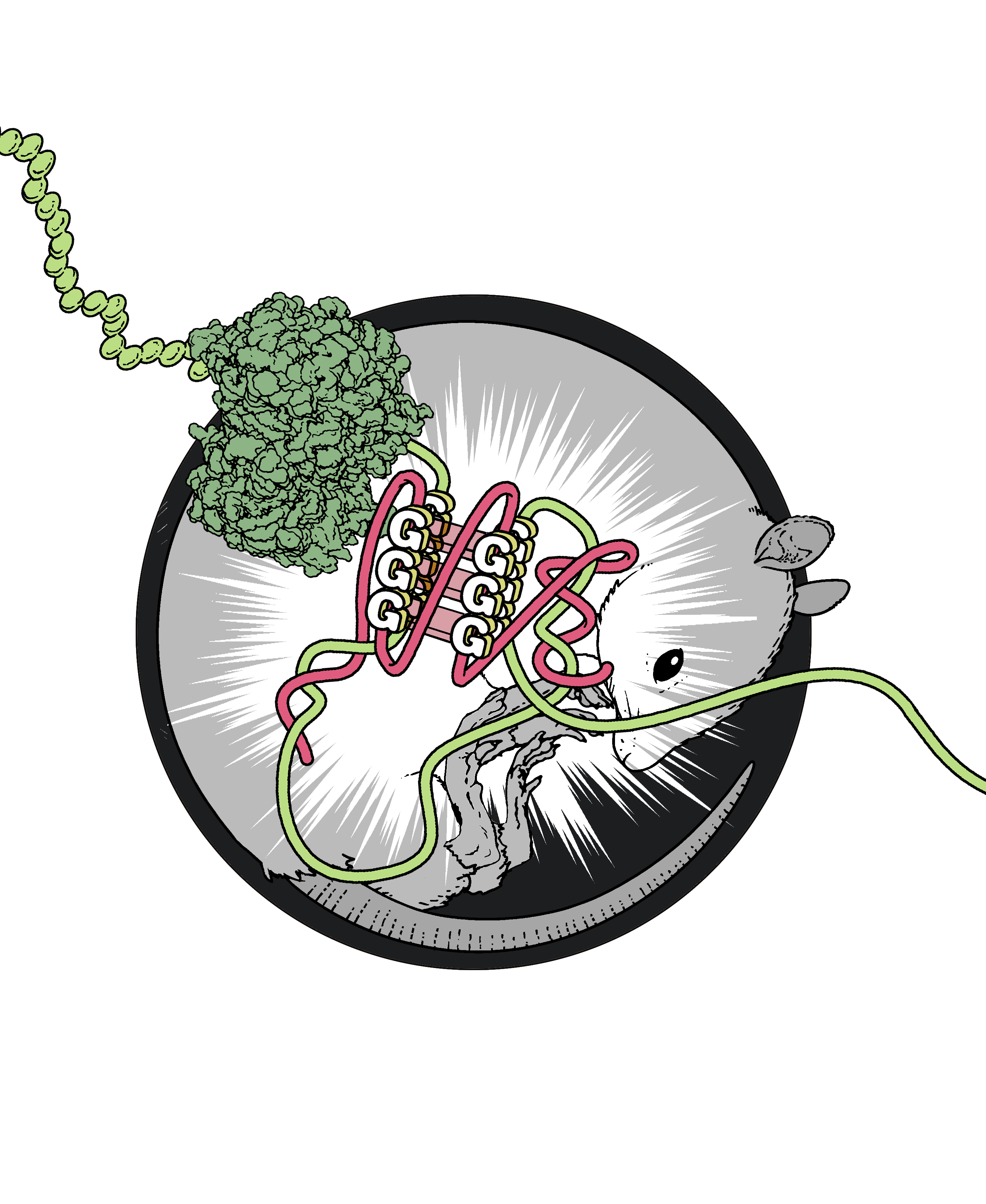
We have developed a new technology (RNA hacking) using Staple nucleic acids for the development of therapeutic drugs for rare diseases and other conditions. RNA hacking is an approach that intentionally alters the “shape” of mRNA using Staple nucleic acids to make protein production difficult. In previous studies, we confirmed that the introduction of Staple nucleic acids suppresses the expression of target genes and exhibits therapeutic effects in a mouse model of cardiac hypertrophy. However, Staple nucleic acids can only be applied to approximately 65% of human mRNAs, and there are genes that cannot be targeted because they lack continuous guanine sequences. Therefore, we have devised an improved version of Staple nucleic acid called Gs-Staple nucleic acid (G-tract-supply Staple nucleic acid). Gs-Staple nucleic acid supplements continuous guanine sequences from the Staple nucleic acid to create a target mRNA and G4 (Complemented binary G4), thereby inhibiting the translation process. We have actually confirmed a decrease in the expression level of target proteins by introducing Gs-Staple nucleic acid in cultured cells and in the bodies of mice. We also discovered that the amount of translation inhibition can be controlled by changing the length of the linker within the Gs-Staple nucleic acid. Moving forward, we aim to utilize this technology for clinical applications and drug development.
Applied Chemistry International Edition
Expanded Gene Targeting in RNA Hacking with G-Tract-Supply Staple Oligomer
Tomoki Kida, Yua Hasegawa, Miko Kato, Mahiro Otani, Ayu Matsumoto, Ririka Taniguchi, Rinka Ohno, Hiroshi Sugiyama, Toshihiro Ihara, Masaki Hagihara, Shin-ichi Sato, Yousuke Katsuda